
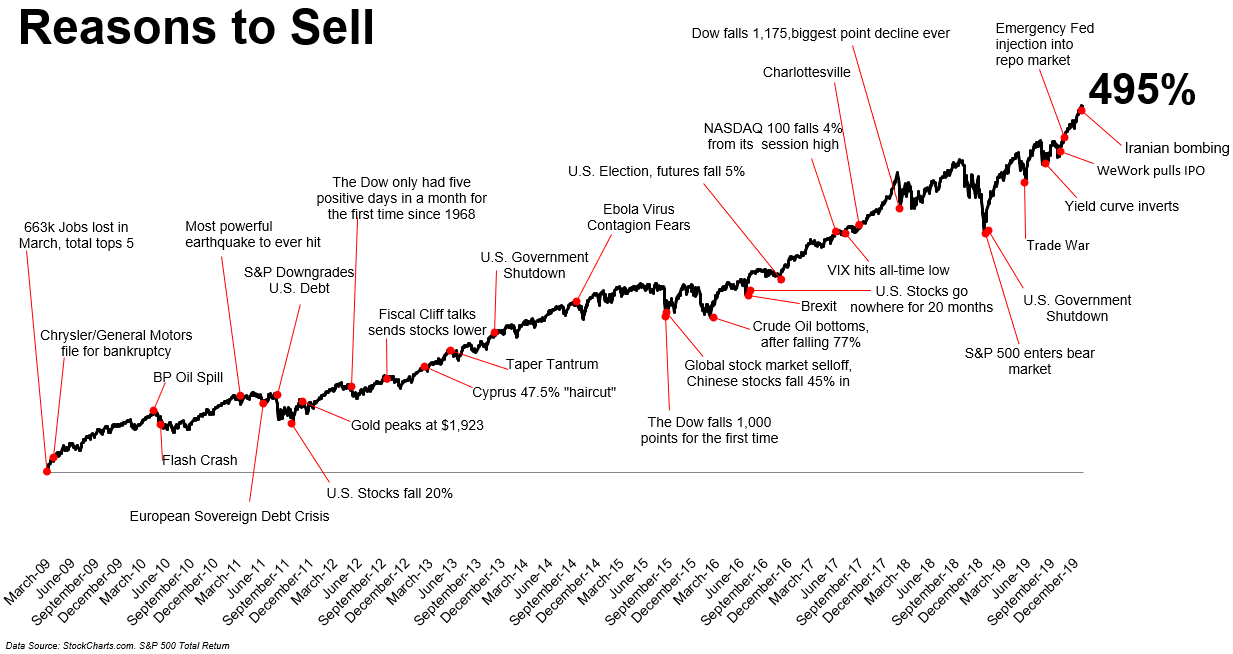
While markets have performed exceptionally well over the past few years, volatility is a normal part of investing. The next downturn will make almost everyone nervous; that's a normal reaction, not something to beat yourself up about. What actually matters is what you do next?
Here's a practical way to think through decisions when the market makes anyone rattled.
Why Volatility Feels Worse Than It Actually Is
You may have heard the saying “selling during a downturn only locks in losses”. While this is true, it actually creates a second problem: you have to figure out when to buy back into the market. Most people wait until things feel safe again or when headlines become positive. By the time they do, the market recovery has usually already happened without them participating.
A few things worth remembering:
- Every downturn in modern market history (wars, recessions, pandemics) has eventually been followed by a recovery.
- The investors who generally came out ahead weren't the ones who guessed the bottom correctly, they were the ones who simply stayed invested.
- There's a real difference between short-term discomfort and long-term damage. One tends to pass on its own while the other usually comes from decisions made in the middle of it.
Three Questions Worth Asking Before Selling in a Downturn
Before you make any changes, sit with these honestly:
1. Has my financial situation actually changed? A market drop on its own doesn't touch your income or your savings rate unless you let it.
2. Will I need this money in the next three to five years? Money with a longer runway has time to recover. If money you'll need soon is sitting in volatile assets, that might be worth a shift in asset allocation.
3. Is my plan still built around my actual goals? Downturns tend to expose an investor’s true risk tolerance. If there is a gap between this and your previously stated risk tolerance, the answer is usually to revisit your financial plan, not scrap it.
What to Avoid During a Downturn
- Checking your balance every day. Watching your balance move doesn't change what the market is doing.
- Making permanent decisions based on temporary conditions. Choices made in a downturn have a way of outlasting the downturn itself.
- Comparing your portfolio to a market index without context. A portfolio built around your retirement timeline was never meant to move like a broad benchmark.
Four Things You Can Do Right Now
These are the moves that matter when markets get rough.
1. Stay in Touch With Your Financial Planner
Talk through what you're feeling and whether your financial plan still fits where you're headed. A well-built plan should help you handle volatility without inducing a dramatic reaction. If yours can't hold up under pressure, it’s worth addressing.
2. Keep Contributing if You're Still Building Wealth
Dollar-cost averaging just means you're buying more shares while prices are down. For investors still in the accumulation phase, a downturn isn't solely a risk; it's also an opportunity. Pausing contributions is one of the more expensive mistakes investors can make. While it feels responsible in the moment, it usually isn't in the long term.
3. Take Another Look at Your Cash Position
Three to six months of living expenses held outside your investment accounts takes the pressure off having to sell when the market is down. Generally, this account is called an emergency savings account. This cushion is what lets you participate in the market as a long-term investor. If you don't have an emergency savings account yet prioritizing savings into it is one of the best things you can do.
4. Put Your Energy Where You Have Control
- Your savings rate
- Your spending habits
- Tax planning
- Asset allocation
These are the things that move the needle over the long run, while being within your control.
The Bottom Line
Volatility isn't evidence that something's broken, it's just part of investing. The real question is whether your plan was built to handle it, and whether you can stick with it when sticking with it is hardest.
If you're not sure where you stand, that's what we're here for. Reach out to one of our CERTIFIED FINANCIAL PLANNERS® and we'll walk through your plan together to talk about what, if anything, truly needs to change.
Investment advice offered through The Wealth Consulting Group, doing business as Impact Wealth Planners, an SEC registered investment advisor.

.png)

